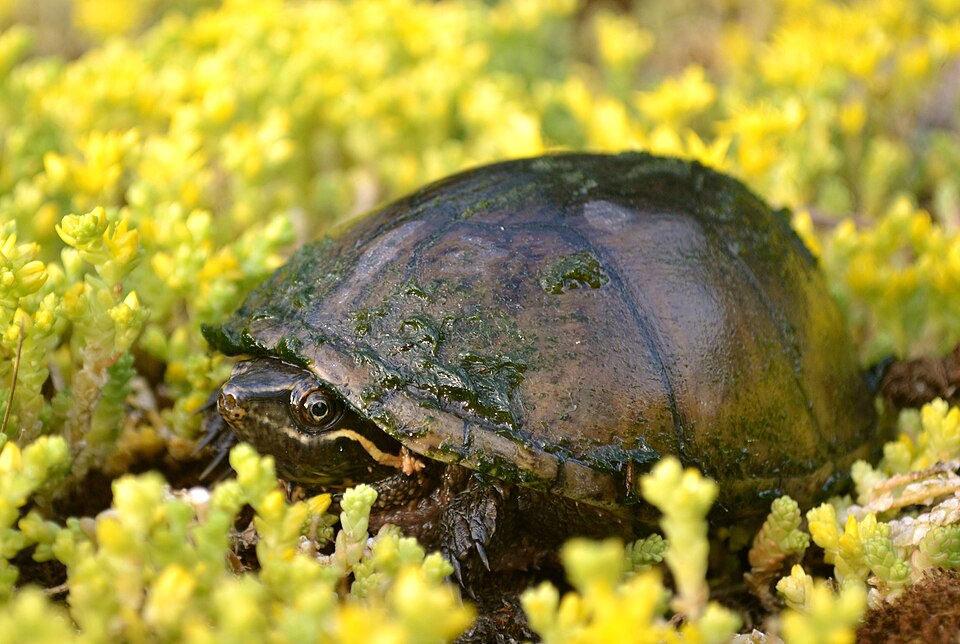
Common musk turtle: A small freshwater turtle with a dark, domed shell and two pale stripes along the head. Adults are often around 10–12 cm long, but still need a substantial habitat.
Other aquatic turtles: Reeves’ turtles, sliders and other musk turtles differ in adult size and care. Sliders can become much larger and are restricted in some places.
Turtles and tortoises: This guide is for a common musk turtle, not a land tortoise or sea turtle. A tortoise must never be put into a deep aquarium as if it were an aquatic turtle.
Care below is specific to common musk turtles. Similar-looking animals may need different conditions.
What and how to feed
Use good-quality aquatic turtle pellets appropriate for this species as part of a varied diet. Suitable earthworms, aquatic invertebrates and appropriate fish or shrimp can provide variety; ask a reptile vet about calcium and the full feeding plan.
Feed in water and use measured portions. Young and adult turtles need different schedules: agree the frequency with a reptile vet rather than feeding whenever the turtle begs.
Remove uneaten food promptly. Dried shrimp alone is not a complete diet, and a turtle should not share an aquarium with pet fish that it may chase or eat.
A suitable home and daily care
Provide a dedicated spacious tank with strong filtration and dechlorinated water. Give a bottom-walking musk turtle secure resting ledges and easy access to the surface; set depth to its size and swimming ability.
Provide a dry platform with a safe ramp, even if the turtle rarely basks. The species care sheet gives water around 22–26°C and a basking spot around 32°C. Guard heaters and lamps, use temperature controls and check with thermometers daily.
Install suitable reptile UVB lighting with shade and a day/night cycle. Follow manufacturer guidance for lamp distance and replacement; ordinary room light or sunlight through glass is not an adequate substitute.
Test water quality and make regular partial changes; do not wait for the water to look dirty. Plan solitary housing, decades of care and an adult-sized setup. Check local laws, use legal captive-bred sources, and never release a pet turtle.
Health and further reading
Swollen eyes, a soft or damaged shell, unusual floating, breathing changes or loss of appetite need a reptile vet. Minimise handling, support the shell and wash hands after contact with the turtle or tank.