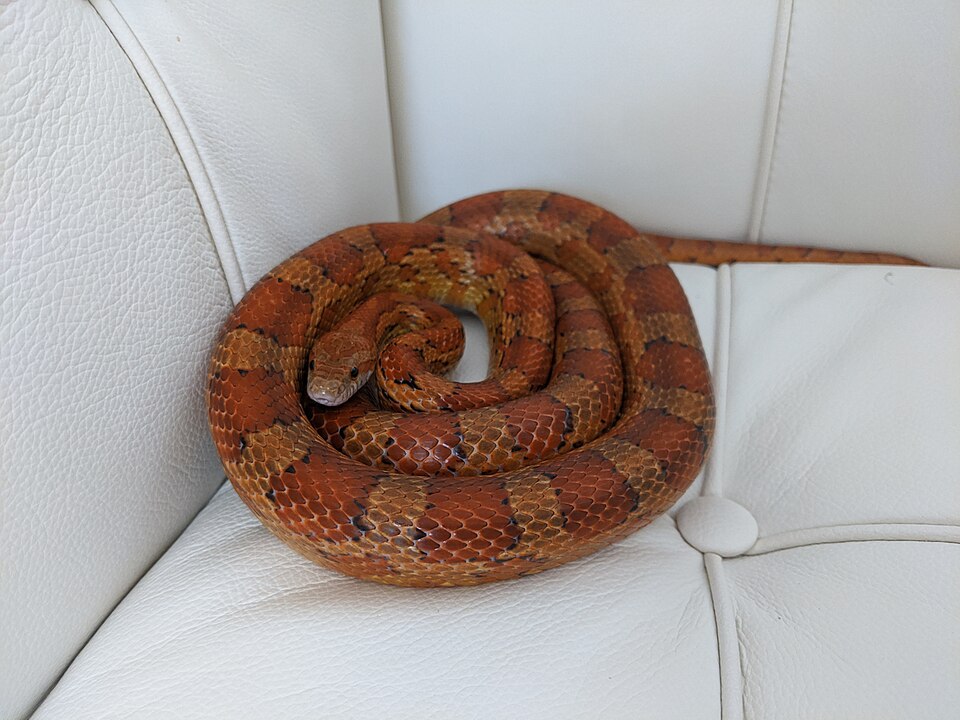
Corn snake: A non-venomous North American snake, often with orange or reddish saddles. Adults can reach about 1.5 m; a baby enclosure will not last for life.
Normal and amelanistic morphs: Normal animals have dark outlines around their markings; amelanistic animals lack black pigment. These are colour forms of the same species.
Other pet snakes: Kingsnakes and ball pythons are different species with different requirements. This guide covers corn snakes only; do not apply its temperatures to every snake.
Care below is specific to corn snakes. Similar-looking animals may need different conditions.
What and how to feed
Offer appropriately sized, fully thawed, commercially supplied whole rodents with feeding tongs. Do not offer live rodents or replace whole prey with pieces of meat. A keeper must be comfortable storing and preparing this food.
RSPCA gives a typical starting schedule of a suitable small mouse every 5–6 days for hatchlings, progressing to a suitable adult mouse every 7–14 days for adults. Adjust with a reptile vet for growth, body condition and health; this is not daily feeding.
Keep fresh water at the cool end and replace it daily or whenever soiled. Leave the snake undisturbed for at least 48 hours after a meal; do not handle during shedding.
A suitable home and daily care
House one corn snake per secure, ventilated vivarium. It must be long enough for the adult to stretch out fully, with climbing branches and snug hiding places at both the warm and cool ends.
RSPCA recommends a basking area of 28–30°C and a cool end of 20–24°C. Use thermostats, guarded heat sources and separate thermometers; never rely on room temperature or an unregulated heater.
Measure humidity (RSPCA suggests around 40–50%) and provide a humid hide. Supply suitable low-level UVB with shade, following lamp distance and replacement guidance; albino morphs need adapted UV exposure.
Spot-clean waste, check equipment every day, and wash hands after handling or cleaning. Choose a legally sourced captive-bred animal; never collect a wild snake.
Health and further reading
Wheezing, discharge, regurgitation, weight loss or retained shed around the eyes need a reptile vet. Do not pull stuck skin or eye caps off yourself.