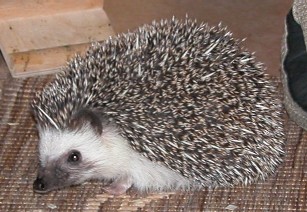
African pygmy hedgehog: Small rounded ears, a pointed snout, a pale underside and a back covered in short spines. The four-toed hedgehog is commonly called the African pygmy hedgehog.
Colour variations: Brown-and-white banded spines, paler colours and albino forms occur. Colour is not a care category and does not guarantee a friendly temperament.
Wild hedgehogs: European and other wild hedgehogs are not the same pet species. Leave wildlife in the wild and contact a wildlife rehabilitator for an injured animal.
Care below is specific to african pygmy hedgehogs. Similar-looking animals may need different conditions.
What and how to feed
Ask an exotic-mammal vet to choose a balanced feeding plan. VCA recommends high-quality hedgehog food alongside suitable low-fat cat food; do not assume every product labelled for hedgehogs is nutritionally complete.
Measure the evening meal and track weight: pet hedgehogs can become overweight. Small portions of commercially raised, gut-loaded insects can add variety; insects alone are not a balanced diet.
Provide clean water at all times and wash bowls daily. Avoid milk, raw meat or eggs, avocado, chocolate and wild-caught insects exposed to pesticides.
A suitable home and daily care
Keep one hedgehog in a spacious, escape-proof home with a solid floor. VCA gives 61 × 91 cm as a minimum floor area; provide more usable space where possible.
Maintain a stable warm environment. VCA gives a general range of 21–29°C; agree a suitable target with your vet, monitor with a thermometer and thermostat any added heat. Avoid draughts, overheating and deliberate hibernation.
Provide a dark sleeping hide, soft low-dust bedding and a sufficiently large solid-surface wheel. Avoid wire floors or wheels that can trap feet. Clean the wheel and soiled bedding daily.
Expect night-time running and rustling. Let the hedgehog wake naturally, allow it to sniff, and handle gently near the floor without forcing it to uncurl. Check local rules and an exotic vet before choosing one.
Health and further reading
A chilled, unusually inactive, wobbly or non-eating hedgehog needs prompt veterinary advice. Skin irritation, spine loss or persistent scratching also warrant a check.