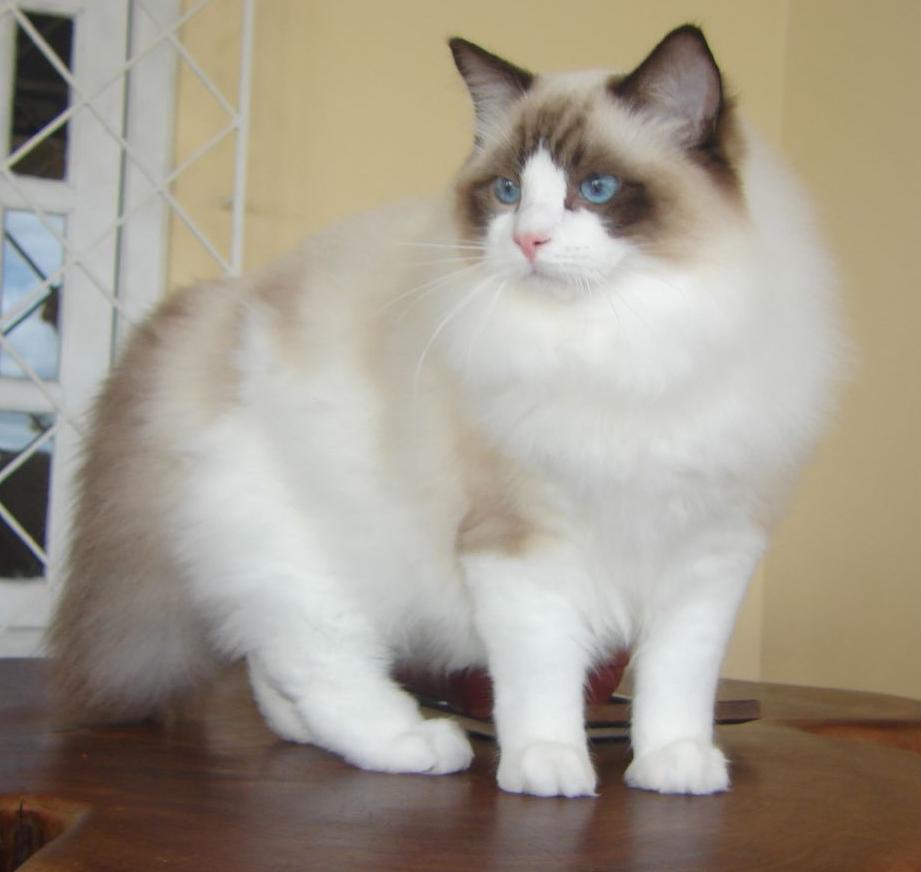
Cats have flexible bodies, whiskers, retractable claws and coats in many colours. Coat length and colour do not predict an individual cat’s personality.
Examples you may meet
Domestic shorthair: Mixed ancestry; short coat in many colours and patterns. Often easier to groom than long-haired cats.
Domestic longhair: Mixed ancestry with a longer coat; needs regular brushing to prevent tangles.
Siamese: Usually a pale body with darker face, ears, paws and tail; often vocal and people-oriented.
These are examples, not a ranking of the best pets. Individuals can differ from typical descriptions.
02 / Food and water
What and how to feed
Choose a complete food labelled for the cat’s life stage; kittens and adult cats have different needs.
Measure portions using the food guide and your vet’s advice. Offer clean water at all times; some cats drink more readily from several bowls or a fountain.
Offer treats sparingly. Avoid feeding human foods that may be harmful, including onions and chocolate. Ask a vet before changing a medical diet.
03 / Everyday life
A suitable home and daily care
Provide a clean litter tray in a quiet place, scratching posts, safe climbing places and somewhere to hide.
Play every day with safe toys, then allow the cat to rest. Give it a choice about being touched or picked up.
Keep up with vaccinations, parasite prevention and vet checks as advised locally.
04 / Keep watching
Health and further reading
A cat that stops eating, struggles to urinate or changes behaviour suddenly needs prompt veterinary advice.
For more detailed care requirements, start with RSPCA cat care. Check species-specific needs with a qualified vet or rescue before bringing an animal home.