Lively birds for someone who enjoys sound, patient training and social interaction.
01 / Meet the animal
Common types and appearance
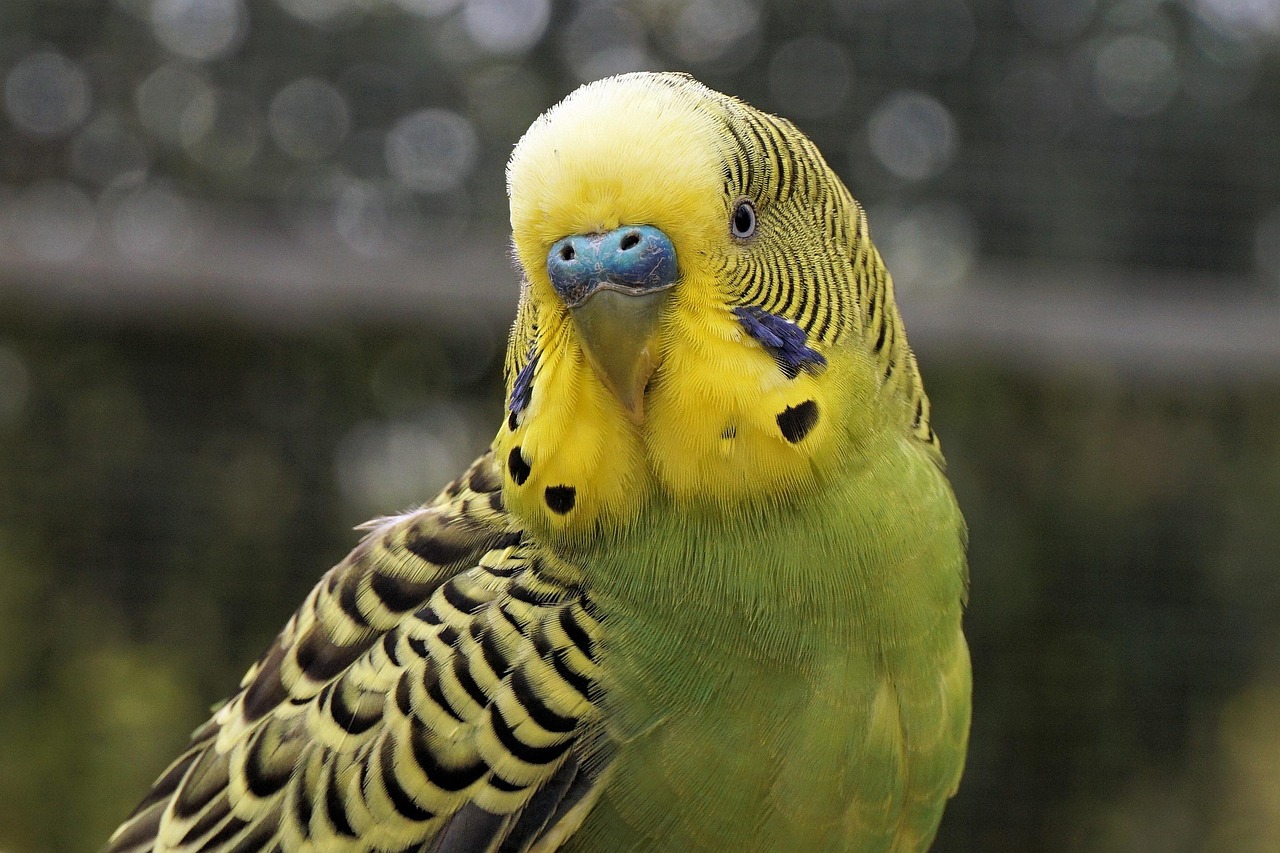
Budgies are small parrots with a curved beak, long pointed tail and striped markings on the head or wings. Feather colour varies widely.
Examples you may meet
Australian or pet-type budgie: Usually smaller and slimmer; green and yellow are common, but many colour varieties exist.
English or show-type budgie: Often larger with a fuller head and longer feathers.
Colour varieties: Blue, white, yellow and mixed-colour birds are common; colour does not change basic care needs.
These are examples, not a ranking of the best pets. Individuals can differ from typical descriptions.
02 / Food and water
What and how to feed
Offer a balanced budgie diet and suitable fresh vegetables. Ask an avian vet about a gradual transition if the bird currently eats only seed.
Replace water daily and wash food dishes. Remove uneaten fresh food before it spoils.
Seeds and millet can be useful as treats or training rewards, but a seed-only diet is not balanced. Avoid avocado, chocolate and alcohol.
03 / Everyday life
A suitable home and daily care
Provide a spacious flight cage with varied perches, safe toys and room for supervised daily flight in a bird-safe room.
Budgies are social. Research suitable bird companionship and allow gentle, patient interaction without forcing handling.
Keep birds away from fumes, aerosols, non-stick cookware fumes, open windows and other hazards. Find an avian vet in advance.
04 / Keep watching
Health and further reading
Birds can hide illness. Fluffed feathers, sitting low, breathing changes or reduced eating call for prompt avian-vet advice.
For more detailed care requirements, start with RSPCA pet care guides. Check species-specific needs with a qualified vet or rescue before bringing an animal home.